Browser Systems Under Your Control
Inspectable simulations, diagnostics, data processing, persistence, and resilient browser architecture.
Operate working demonstrations that expose capability detection, execution paths, performance, saved state, failure, and recovery. Every system is built to remain understandable and useful across changing browser conditions—without requiring AI inference or a server connection.
Systems You Can Operate, Inspect, and Understand
Transgalactic Systems Lab treats the browser as a serious application runtime. We build inspectable systems in which simulation state, processing boundaries, capability checks, persistence, timing, errors, and recovery remain visible. Advanced APIs are used only when they solve a measured problem, with credible fallback paths when support or execution fails. The Lab was built with AI assistance, but it does not depend on visitor-facing AI, model connections, or external inference services.
01.
Architecture Made Visible
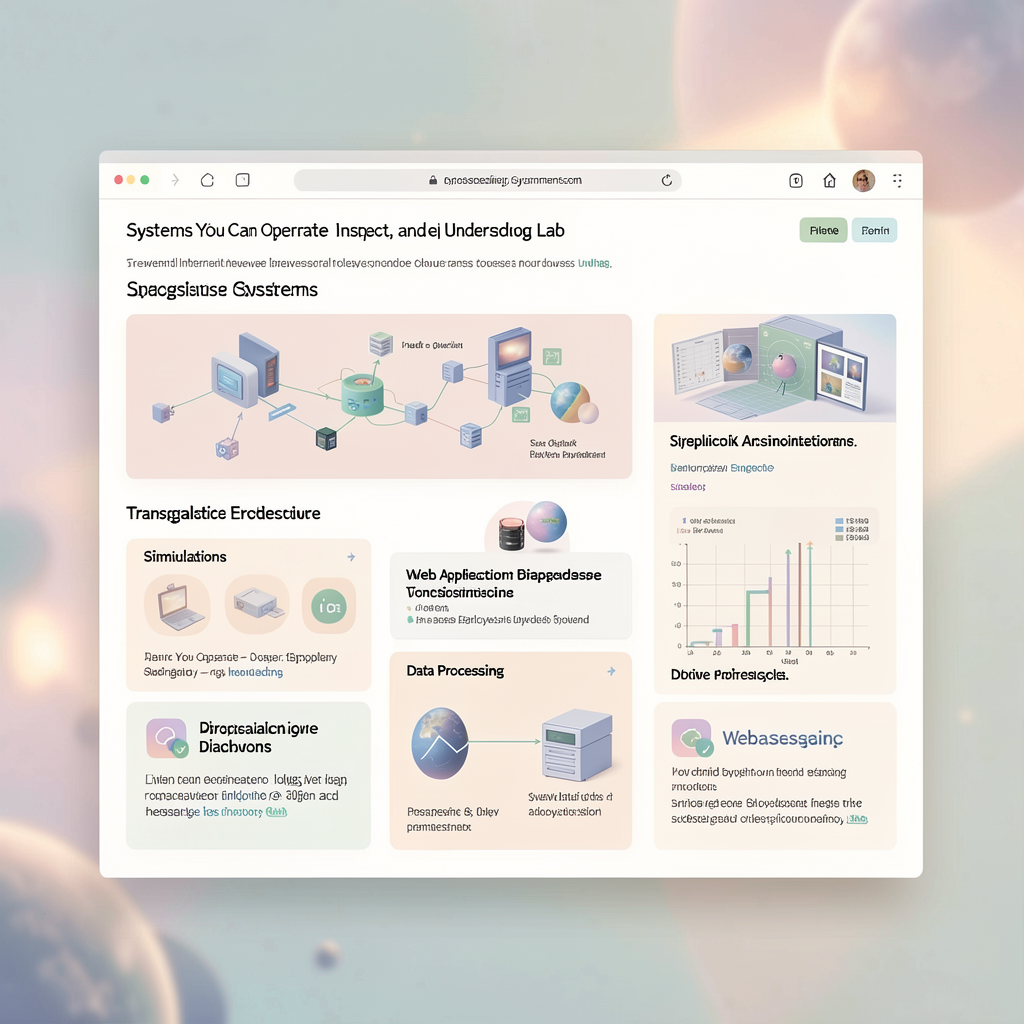
Our demonstrations expose data flow, runtime state, timing, errors, and recovery controls instead of presenting only the successful path. Instrumentation is part of the system from the beginning, making technical behavior measurable and open to inspection.
02.
Capability-Aware by Design
Each application detects the browser features it can actually use, selects an appropriate execution path, and explains the consequences. Workers, storage, WebAssembly, and optional server services improve specific tasks without becoming prerequisites for the core experience.
Inspectable Browser Systems
We build browser applications as legible systems: explicit state, measurable behavior, defined subsystem boundaries, and useful fallback paths. Each service treats diagnostics, accessibility, performance, persistence, and failure recovery as core architecture.
Interactive Simulations and Demonstrations
Deterministic or time-stepped browser simulations with adjustable parameters, pause and step controls, visible telemetry, and separation between simulation and rendering time. Every demonstration is designed to be operated, measured, and understood.
Worker-Based Data Processing
Main-thread and Web Worker pipelines using structured cloning, transferable data, streaming, cancellation, and recovery. We measure execution, startup, and transfer costs before selecting an execution model.
Diagnostics and Local Persistence
Capability detection, runtime status, IndexedDB or local-storage design, schema versioning, migration, import, export, and reset controls. Unsupported features and storage failures are reported clearly, with credible fallback behavior.
Built to Be Operated, Inspected, and Understood
The Lab treats architecture, performance, state, and failure as visible parts of the system. Each demonstration shows not only what works, but which path is active, why it was chosen, and how the application responds when conditions change.
01/
Visible System Behavior
Runtime status, timing, data flow, errors, and recovery controls remain in view. Visitors can inspect the system instead of watching an unexplained result.
02/
Graceful Degradation
The application detects available browser capabilities, uses advanced paths when useful, and keeps credible fallbacks when workers, storage, WebAssembly, or network services are unavailable.

03/
Clear Execution Boundaries
Main-thread code, Web Workers, WebAssembly-ready modules, persistence, and optional Node.js services have defined responsibilities. Each boundary can be measured, compared, and replaced.
Systems You Can Operate, Inspect, and Trust
Browser software should reveal how it works. Transgalactic Systems Lab makes state, performance, capability, and failure visible, so complex applications remain understandable under real conditions—not only along the ideal path.
Architecture That Stays Legible
Clear boundaries between the interface, processing, simulation, storage, diagnostics, and optional services make the system easier to inspect, maintain, and extend.
Useful Under Imperfect Conditions
Progressive enhancement selects the best available path while preserving credible fallbacks. Missing storage, failed workers, unavailable WebAssembly, or lost network access are reported clearly without making the whole application unusable.
Performance You Can Measure
Instrumentation exposes timing, responsiveness, transfer costs, and execution paths. Workers and WebAssembly are used only when evidence shows that they solve the actual problem.

Transgalactic Systems Lab
12345 Street Name, City. State 12345
(123) 456 7890.
© Copyright 2026 Transgalactic Systems Lab